There was both excitement and concern when the Uttarakhand government announced plans to build a 13-kilometre ropeway to Kedarnath, a sacred pilgrimage site in the state.
The project is being carried out by Adani Enterprises through a Public-Private Partnership (PPP) model and aims to drastically reduce the strenuous eight-hour trek to a 30-minute ride.
It promises comfort, economic growth, and improved accessibility.
However, beneath this narrative of progress lies a deeper ethical and ecological question: can the fragile Himalayas withstand yet another major infrastructure push?
The ropeway, projected to be among the longest in India, is being installed using what is known as “3S” technology—a cutting-edge tri-cable system designed for greater stability in challenging mountainous environments.
The gondola system proposes to connect Sonprayag to Kedarnath, traversing steep and geohazard-prone ridges. Media releases promise world-class engineering standards, minimal degradation of forest land, and the creation of a sustainable tourism model.
However, information related to environmental and geological safety assessments—particularly concerning landslide zones, seismic risk, and hydrological risks—remains unpublished.
It is particularly concerning that for a project with such significant ecological implications, no peer-reviewed or independently accessible documentation is available that details its hazard management and mitigation designs.
According to a report by the Geological Survey of India (GSI), around 22% of Uttarakhand is classified as being highly prone to landslides. Many of these vulnerable locations lie along the Char Dham route, particularly near Kedarnath, one of the four holy shrines.
The Times of India, while reporting on the Char Dham Highway Project, cited a study that identified over 800 fresh landslides, attributed to “unscientific hill cutting” and steep slope excavations exceeding 80 degrees across the state.
Such interventions weaken the natural binding of mountain slopes, making them highly unstable during the monsoon season and seismic events.
Local residents and environmental organizations have also expressed the same concerns.
A local resident speaking at a discussion forum stated, “There will be significant deforestation for this, which will lead to ecological imbalance and, in turn, floods and landslides.”
Their fears are not even close to being exaggerated - the Kedarnath valley, as the past indicates, has a very sad record of an imbalance between nature and human activities.
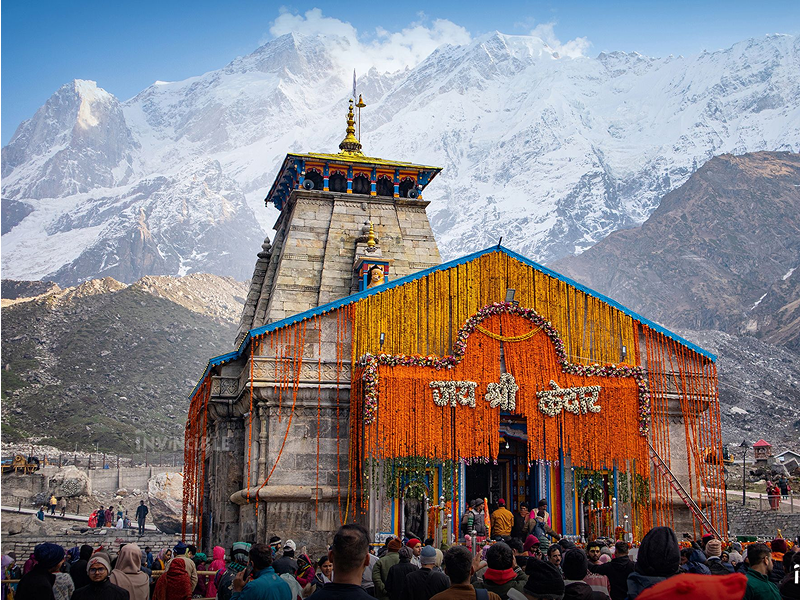
People still remember the floods in Kedarnath in 2013. One of the worst natural disasters in modern India was unleashed by glacial bursts and torrential rain, killing thousands of pilgrims and locals.
The tragedy revealed the precarious balance between Himalayan ecology and human construction. Large-scale projects, such as roads and hydropower dams, have continued to spread throughout the region with little ecological foresight in spite of numerous scientific warnings.
The region's continued vulnerability was brought to light by flash floods and heavy rainfall in 2023 and 2025. The risk matrix has only grown as a result of climate change's intensifying rainfall patterns, melting glaciers, and destabilising permafrost.
While the ropeway promises to reduce foot traffic on the traditional trekking route, it may paradoxically increase the overall tourist load. Easier access typically translates into higher footfall, necessitating more hotels, shops, and waste management systems - all of which exert additional pressure on the fragile environment.
Experts quoted in The Tribune warned that “the ropeway and increased accessibility could lead to ecologically disastrous consequences,” particularly in a zone still recovering from recurrent disasters. The Kedarnath valley, marked by steep slopes and narrow river channels, has a limited carrying capacity.
The Ministry of Environment’s guidelines clearly state that infrastructure in such areas must consider carrying capacity studies before sanctioning large projects. No such data for Kedarnath’s ropeway has yet been made publicly available.

For a project of such scale and sensitivity, public transparency is crucial. Yet, beyond official press releases, detailed reports on environmental impact, slope stability studies, or disaster preparedness plans remain inaccessible.
In a democratic setup, such opacity breeds mistrust, especially when past projects in Uttarakhand - like the Char Dham Highway and hydropower ventures - have shown significant gaps between environmental promises and on-ground execution.
The High Court of Uttarakhand, in multiple rulings over the past decade, has emphasized the need for rigorous Environmental Impact Assessments (EIAs) and real-time monitoring for Himalayan projects.
Whether those judicial directions are being fully honoured in this case remains unclear.
The Kedarnath ropeway represents a larger tension within India’s mountain policy—the tension between economic access and ecological accountability. There is a case to be made for improving infrastructure to bolster pilgrimage safety and support the regional economy.
However, mountains demand humility and restraint, not subjugation. As one environmentalist put it, “The Himalayas are not obstacles to be conquered, but living systems to be respected.”
To truly advance sustainable development, we must consider the slow, silent voice of the earth beneath. Without established and credible safety data, climate-adaptive engineering, and strong, community-driven engagement, the Kedarnath ropeway risks becoming yet another instance of short-term gain and long-term precariousness.
Himani Usha Tripathi is a writer, mentor, and performing artist whose work bridges education, sustainability, and cultural expression. A Delhi University alumna and author of Crossroads of Cultures: The Impact of Cultural Diffusion on Society (2024) & Homeward Air (2025), she has collaborated with UN-affiliated organizations and contributes to national and international publications.
Liked this blog? We urge you to support our ongoing advocacy and research efforts by donating us online here:

Scan the QR

