Imagine standing in the Himalayas in January. One would expect bone-chilling cold, snow-covered mountains, and frozen landscapes. Instead, January 2026 began very differently across parts of Uttarakhand. Large stretches of the region remained without snow, while smoke from forest fires covered many areas.
The situation is becoming increasingly alarming for local communities, as these environmental changes are already affecting livelihoods, water availability, tourism, and daily life. According to NASA FIRMS data, nearly 199 forest fire incidents were recorded during the winter of 2025 alone.
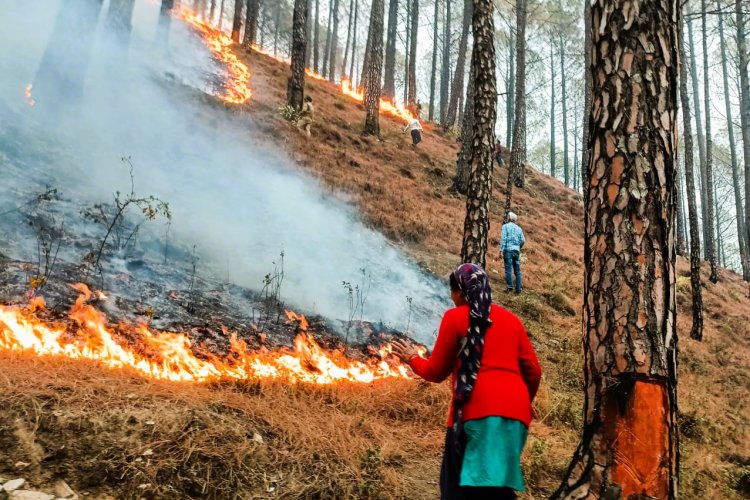
This marks a significant and worrying shift for the Himalayan ecosystem. Rising temperatures, declining snowfall, and increasing winter forest fires are not just isolated environmental events they are indicators of deeper ecological disruption. Recent scientific studies also warn that these changing climate patterns are severely affecting biodiversity, forest health, and the fragile ecological balance of the Himalayan region.
Uttarakhand, often called Devbhoomi, is known for its sacred sites, spiritual heritage, and breathtaking Himalayan landscapes that attract tourists from across India and the world. Its forests are not just ecological assets but lifelines for local communities, providing fuelwood, fodder, medicinal herbs, and water through mountain springs.
However, the winter of 2025–26 broke the region’s usual climatic pattern. Instead of heavy snowfall and prolonged cold conditions, Uttarakhand witnessed a severe “snow drought” caused by the declining frequency and intensity of western disturbances. The lack of snowfall has affected agriculture, disrupted ecological balance, accelerated glacial stress, and increased vulnerability to forest fires and carbon emissions.
At the same time, recent climatic instability marked by extreme winds and unseasonal rainfall has made the situation even more severe for mountain communities already struggling with changing weather patterns and environmental uncertainty.
But recent climatic variations marked by extreme winds and unseasonal rainfall have made the situation even more severe.
The state has been experiencing a severe “hydrological drought” a condition caused by nearly 100% precipitation deficit and very little snowfall in higher-altitude regions. This has pushed glaciers towards a net mass loss and disrupted the region’s natural water cycle.
The lack of snowfall and prolonged dry conditions have also dried out soil surfaces, creating ideal conditions for forest fires and irrigation shortages. During winter, when humidity remains low and sunlight becomes unusually harsh, the risk intensifies further.
Experts have also observed signs of a “False Spring” across the Himalayan region, where unusually warm days and intense sunlight create deceptive seasonal conditions. This not only increases ecological stress but also disrupts agricultural cycles and crop behaviour.
Several districts, including Chamoli, Tehri, and Bageshwar, reportedly witnessed 15–20% crop losses. Apple farming a major pillar of the mountain economy was also severely affected due to changing temperature and snowfall patterns.
While climate change remains a major driver behind these changes, human activities are further worsening the crisis. Even controlled agricultural burning, under such dry and unstable conditions, can quickly trigger fires that spread across large forest areas.
Fires were recorded in some of India’s most ecologically sensitive regions, including the buffer zones of Nanda Devi National Park, the Gangotri Valley, and the Valley of Flowers National Park. The Valley of Flowers, a UNESCO World Heritage Site once known for its harsh winters and pristine snow-covered landscape, instead witnessed forest fires at the very beginning of the year.
The Nanda Devi range reportedly experienced isolated fires that continued burning for nearly five days in inaccessible terrain, requiring even the intervention of the Indian Air Force to support firefighting and rescue efforts.
During my short visit to Binsar Wildlife Sanctuary, I witnessed the fear and disruption caused by these fires firsthand. A major fire in the sanctuary claimed the lives of four firefighters and left several others seriously injured. The sanctuary was temporarily closed, and instead of witnessing its biodiversity, I saw burnt trees, ash-covered ground, and smoke-filled landscapes.
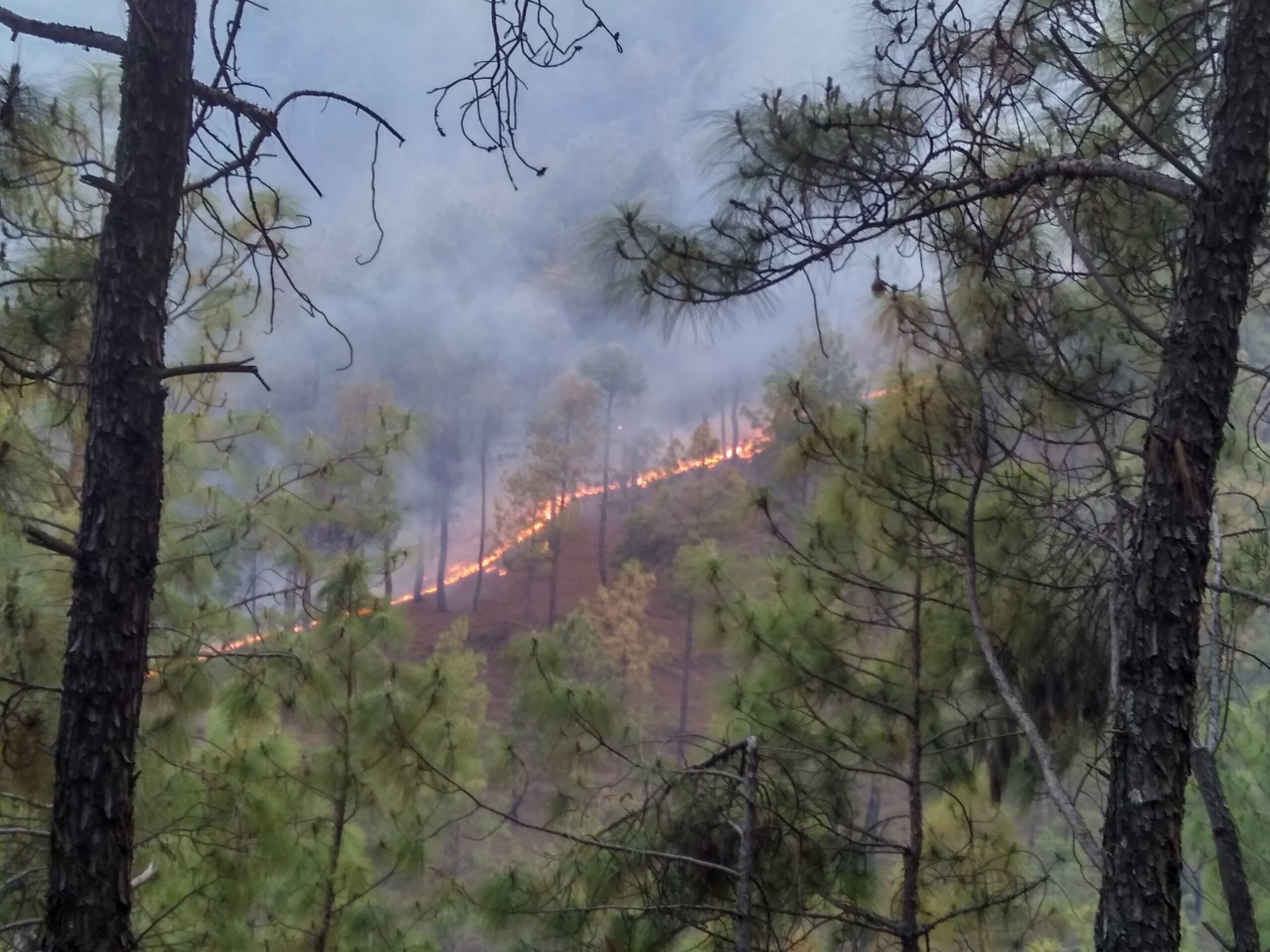
When I spoke to residents, one person remarked, “Har saal aise hi hota hai… kya kar sakte hain ab? Humare paaltu janwar bhi is aag mein jal jaate hain.” (We face a similar situation every year. What can we really do? Our domestic animals also become victims of this fire)
The statement reflected both helplessness and normalisation of a growing crisis.
While local communities alone cannot reverse larger climatic forces, they remain the first responders during such disasters. With proper training, equipment, and early warning systems, communities can play a crucial role in reducing damage and saving lives.
In fragile Himalayan ecosystems, preparedness is not a luxury — it is often the difference between resilience and tragedy.
These extreme events are closely linked to changing patterns of Western Disturbances (WDs), which are the primary drivers of winter rainfall and snowfall in the Western Himalayas. Recent scientific observations suggest that shifts in atmospheric circulation and moisture patterns are weakening the precipitation-carrying capacity of these systems, resulting in declining winter snowfall and rainfall across the Himalayan region over the past few decades.
At the same time, unusual shifts in weather conditions have reportedly pushed the forest fire season nearly two to three months ahead of its normal cycle. Reduced winter precipitation, prolonged dry spells, and rising temperatures are together creating highly flammable conditions across the mountains.
The crisis is not just environmental — it is deeply social and economic. Crop losses, water shortages, ecological degradation, and disruptions in tourism are increasingly affecting local livelihoods. Unpredictable temperature fluctuations are damaging agricultural cycles, while reduced snowfall has also impacted tourist footfall in several hill regions, causing economic losses for local communities dependent on seasonal tourism.
The broader concern is that climate change-driven snow droughts, combined with rising temperatures and weakening winter systems, are transforming the Himalayan ecosystem itself.
While local administrations have assured communities that preventive measures and response systems will be strengthened, an important question remains: will reactive measures alone be enough in the face of intensifying climate extremes?
The Himalayas now require long-term climate adaptation, stronger disaster preparedness, community training, ecological restoration, and more climate-sensitive development planning. Climate change is no longer a distant warning for mountain states it is already reshaping their environment, economy, and everyday survival.
Ritika Verma is a Research Associate at the Indian Council for Research on International Economic Relations (ICRIER), Delhi, India. She has been working on issues of climate change, energy transition, and sustainable development.
Liked this blog? We urge you to support our ongoing advocacy and research efforts by donating us online here: