Every monsoon in Uttarakhand brings familiar headlines. A hillside gives way, taking a road with it. A bridge approach washes away. A retaining wall collapses somewhere in the hills, and repair crews return to work before the rains have fully subsided. Public attention is usually directed towards engineering failures, substandard construction, and administrative negligence. As the previous instalment of this series noted, however, every reconstruction project carries an environmental cost of its own through fresh quarrying, new materials, transport, excavation, and the disposal of debris. This cost recurs every year, yet it is rarely measured.
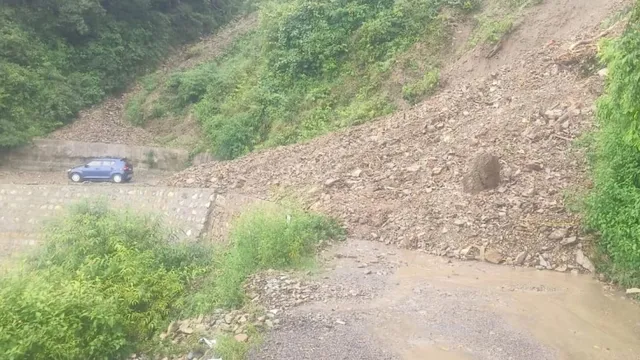
When infrastructure fails, the natural response is to call for stricter environmental laws or more stringent regulation. Such debates are necessary, but they overlook an important instrument that governments use every day, long before any regulator is called upon to act. Before a hillside is cut or a bridge foundation is laid, the State has already determined the standards a contractor must meet, the criteria by which bids are evaluated, and who bears the risk if something goes wrong. These decisions shape environmental outcomes long before construction begins, and well before any environmental clearance is reviewed.
Public procurement is environmental policy. It simply operates through public spending rather than legislation. Much of Uttarakhand's infrastructure was built for a climate the State no longer experiences. The Intergovernmental Panel on Climate Change's (IPCC) Sixth Assessment Report finds that mountain regions, including the Hindu Kush Himalaya, face increasing exposure to intense rainfall, flooding, and landslide hazards as global temperatures rise. Infrastructure designed under historical climatic conditions is therefore likely to face growing stress under present and future realities.
Several governments have responded to this challenge not by rewriting environmental laws, but by changing the way they procure infrastructure.
The European Commission's Green Public Procurement (GPP) framework encourages public authorities to move beyond selecting the lowest upfront bid. Instead, it evaluates infrastructure across its full lifecycle, including durability, maintenance requirements, resource efficiency, and environmental performance. A bridge that remains functional for decades with minimal maintenance may ultimately provide greater public value than one that is cheaper to construct but requires repeated rehabilitation.
The Netherlands has taken this approach a step further. Rijkswaterstaat, the agency responsible for the country's national roads and waterways, has integrated sustainability directly into its procurement process through two instruments: the CO₂ Performance Ladder and DuboCalc. The CO₂ Performance Ladder rewards contractors that demonstrate measurable reductions in their carbon emissions by translating this performance into a pricing advantage during tender evaluation.
DuboCalc assesses the lifecycle environmental impact of a proposed design and converts it into a single environmental cost indicator that is considered alongside the financial bid. More than 300 Dutch contracting authorities now use the CO₂ Performance Ladder in their tenders. Environmental performance therefore becomes a factor on which contractors actively compete, rather than merely a compliance requirement after construction.
International lending institutions have adopted a similar approach. The World Bank's Sustainable Procurement Guidance encourages borrowing governments to evaluate infrastructure based on lifecycle cost rather than initial contract price alone. The underlying principle is that maintenance requirements, operational efficiency, and long-term resilience ultimately determine what an asset costs a country, both financially and environmentally, over its useful life.
This is not to suggest that Uttarakhand should adopt a European procurement model wholesale. Its geography, institutional capacity, and fiscal constraints are very different. The underlying principle, however, remains relevant. Governments can shape environmental outcomes long before construction begins, and procurement remains one of the most effective tools for doing so.
That conversation has barely begun in India. Tender documents still prioritise cost, technical compliance, and completion timelines. These considerations remain important, but they do not address the question that matters most for a Himalayan state where every monsoon acts as a stress test: how long is this infrastructure actually expected to perform before the next reconstruction becomes necessary?
Procurement policy sets the direction, but contracts determine whether its objectives are achieved. Most public works contracts in India continue to revolve around three familiar variables: cost, quality, and time. Once a project is certified as complete and the defect liability period expires, the contractor's obligations largely come to an end. This arrangement works reasonably well where infrastructure operates under relatively stable conditions, conditions Uttarakhand does not enjoy. Every monsoon serves as a stress test, yet a completion certificate provides little indication of whether a road, retaining wall, or drainage system will withstand the next one.
Many countries have addressed this challenge through Performance-Based Contracts (PBCs), under which payment is linked to measurable service standards maintained over an extended period rather than to the act of construction alone. Contractors remain responsible for maintaining the asset at an agreed standard, often for several years after the work is completed.
Canada was the first to adopt this approach at scale when British Columbia introduced performance-based highway maintenance contracts in 1988. Australia, New Zealand, the United States, and several European countries followed during the 1990s. The World Bank has since promoted similar models, known as Output and Performance-Based Road Contracts, across many developing countries. Experience suggests that these contracts can reduce lifecycle maintenance costs and improve service quality by encouraging preventive maintenance instead of reactive repairs.
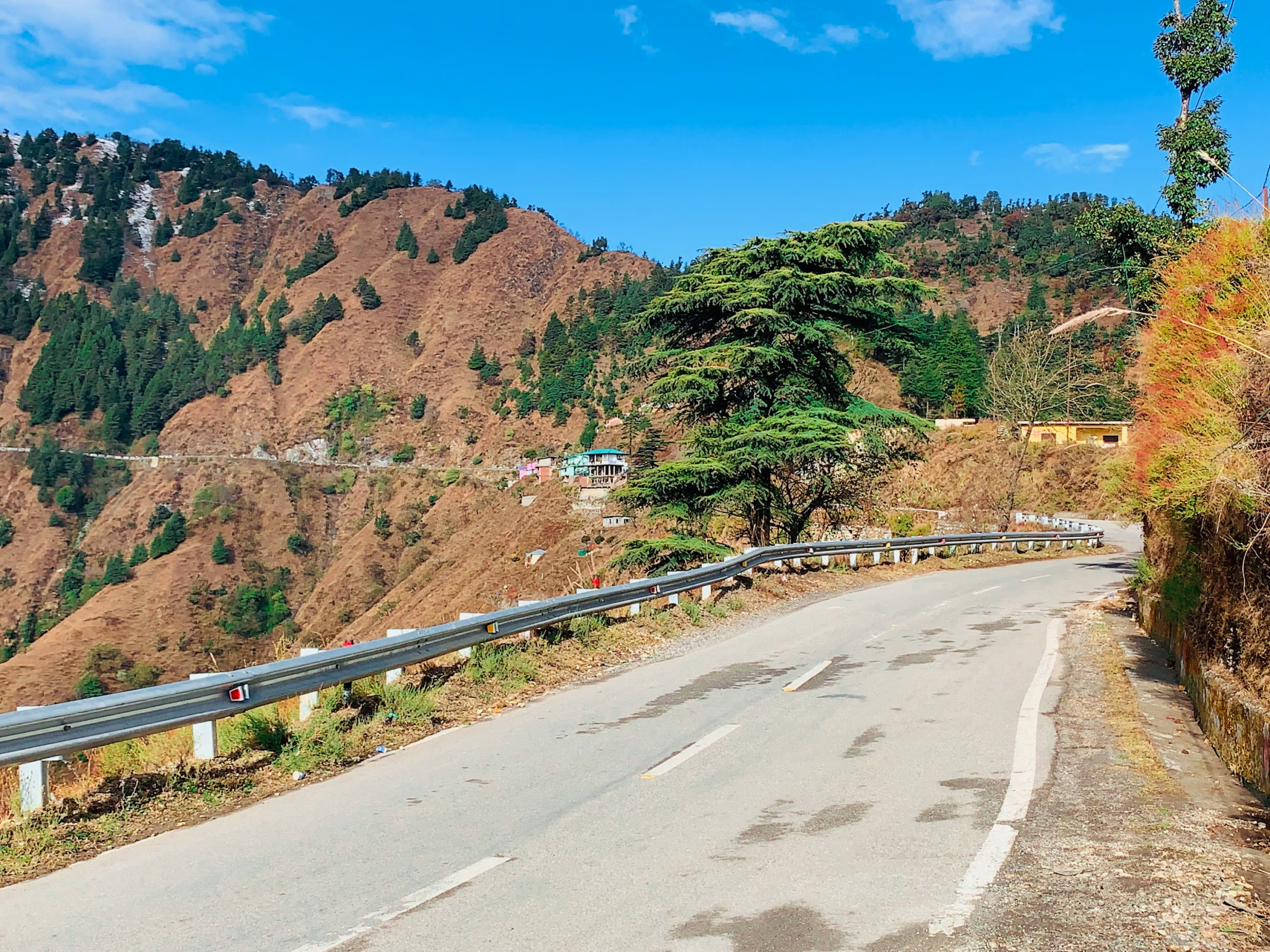
India is not unfamiliar with this approach. The Pradhan Mantri Gram Sadak Yojana (PMGSY) has long required contractors to maintain rural roads for five years after construction through its standard bidding documents. Himachal Pradesh has taken this principle further through a World Bank-supported Output and Performance-Based Maintenance Contract designed specifically for its mountainous terrain. Its bidding documents are adapted to different geographical zones within the state. Given Uttarakhand's similar terrain and monsoon conditions, this approach deserves serious consideration for larger state infrastructure projects.
Applied to Uttarakhand, this could mean extending performance guarantees beyond construction milestones and linking them to post-monsoon resilience assessments. Retention money, for example, need not be released immediately upon project completion. Instead, it could be linked to how infrastructure performs over one or two subsequent monsoon seasons. Independent inspections could assess whether drainage systems continue to function, slopes remain stable, and erosion-control measures are effective. Such measures would align contractors' financial incentives with the long-term performance that the public expects, rather than simply rewarding completion on schedule.
Contracts could also assess environmental performance alongside conventional engineering specifications by evaluating bids on lifecycle impact rather than construction cost alone. For Uttarakhand, relevant criteria could include slope stability, drainage efficiency, debris management, and the long-term maintenance burden associated with a particular design. A proposal that demonstrably reduces the likelihood of future reconstruction should be considered more valuable than one offering only the lowest upfront price.
None of this requires a new environmental law. It can be achieved through procurement policy and the standard contract conditions that the State already uses for major public works. A Uttarakhand Climate-Resilient Procurement Framework could mandate lifecycle costing for infrastructure in ecologically sensitive areas, introduce performance-based maintenance obligations for high-risk projects, strengthen performance guarantees linked to post-monsoon inspections, and incorporate environmental criteria into bid evaluation. Such measures would complement existing environmental clearances by addressing questions they were never designed to answer.
Public procurement represents one of the largest areas of government expenditure. Across OECD member countries, it accounted for approximately 12.9 percent of GDP in 2021, up from 11.8 percent in 2007. The OECD identifies public procurement as a strategic policy instrument capable of advancing economic, social, and environmental objectives. Viewed in this way, procurement allows governments to influence environmental outcomes before construction even begins, when design choices, contractual incentives, and project standards can still shape long-term resilience.
Uttarakhand cannot prevent every cloudburst or landslide. It can, however, determine what it expects from every contractor entrusted with building infrastructure in one of the world's most fragile mountain ecosystems.
Vamsi Mohana is a Partner at Fathom Legal and a lawyer cum policy professional with ten years of experience.
Liked this blog? We urge you to support our ongoing advocacy and research efforts by donating us online here: