I have lost count of the number of times I have stopped a tourist vehicle in Dehradun after seeing someone throw waste out of the window. Throwing a coffee cup out of the car almost seems like the natural last step after ordering and consuming coffee. And just like that, waste becomes a ‘them’ problem.
This is a particularly common sight around the tourist-heavy parts of Dehradun: Maldevta, Rajpur Road, Mussoorie Road, and Old Rajpur. This apathetic behaviour towards our waste makes me wonder about our relationship with it.
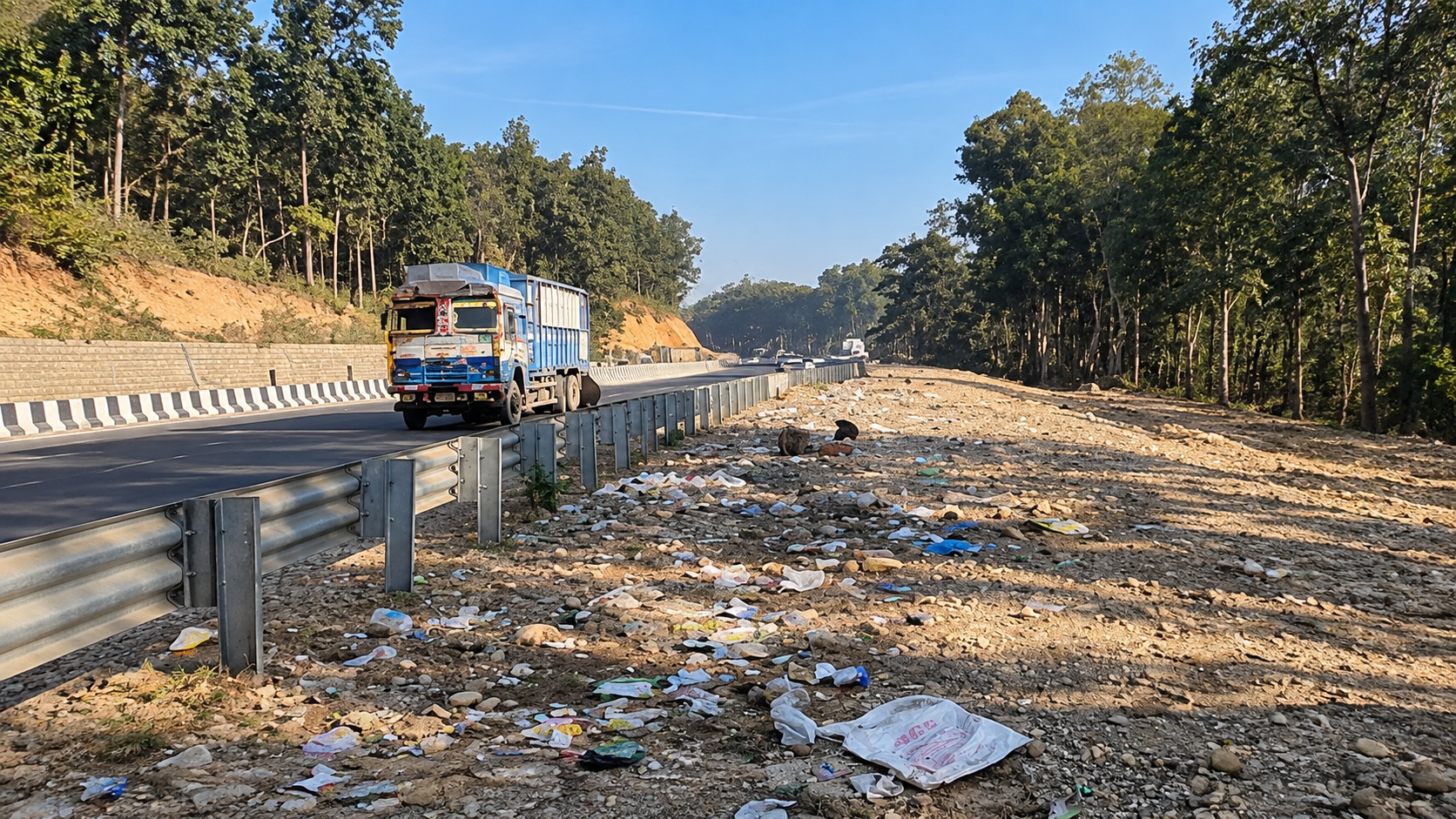
Unfortunately, contrary to what we locals would like to believe, this is not only a tourism problem. We have some introspection to do here as well.
There is a second, less visible problem that Dehradun is facing: the waste that the city generates every day inside its homes, offices, restaurants and businesses. We put it in a bin, someone comes and collects it, and for most of us, the story ends there. But it doesn’t.
India has had a framework for managing municipal solid waste for years. The Solid Waste Management Rules, 2016, place some responsibilities on waste generators, including segregation at source and handing waste over to authorised collectors.
Dehradun’s Solid Waste Management Bye-Laws, 2019, further require households to segregate waste into biodegradable, non-biodegradable and domestic hazardous waste, while also providing for collection systems, user fees and penalties for non-compliance. The Urban Municipal Solid Waste Management Action Plan for Uttarakhand, 2017, also outlines the broader waste management framework.
The responsibility does not end with households either. Resident Welfare Associations (RWAs), gated communities, commercial establishments and bulk waste generators also have defined responsibilities within the city’s waste management framework.
On paper, the chain of accountability is fairly clear. On the ground, it becomes much less so.
My research with National Law University Delhi during my PGD in Environmental Law, along with my work with a local Dehradun-based waste management NGO, has made this gap particularly visible to me.
Having read the SWM Rules, 2016, in depth, I am aware that there are frameworks at almost every level, from the Central and State governments to municipal authorities, resident welfare associations and individual households.
But when it comes to implementation, accountability seems to fade somewhere along the chain. The scale of this gap is visible in the data.
A 2024 CAG audit of solid waste management in Uttarakhand found that only 3.13% of collected waste was segregated across the 13 test-checked urban local bodies, against a requirement of 100%. Only 0.09% was segregated at source. This is despite source segregation being a mandatory responsibility of waste generators under the SWM Rules.
And unfortunately, we citizens are part of that problem.
The phrase “civic sense” is often where these conversations begin and end: don’t litter, use a dustbin, keep your surroundings clean, segregate your waste. But I think we have been discussing the bare minimum for too long. The climate and ecological reality around us should have changed the urgency of this conversation.
The Himalayas are already experiencing the consequences of a rapidly changing climate, from glacial changes to extreme rainfall and floods across the region. Waste may not be the cause of these events, but treating waste as an out-of-sight, out-of-mind issue is no longer a harmless habit.
So what does taking our waste seriously actually mean? It starts at home. My own household has a municipal corporation waste collection vehicle that comes to our home. We segregate our waste, compost our wet waste, and wash used plastic before disposal. These are small responsibilities that should become normal rather than ‘exceptional’.
But this is where another uncomfortable question emerges: what happens after the waste leaves our doorstep?
If segregated waste is eventually mixed together and ends up in a landfill, then the citizen has done their part, but the system has not completed its part. Conversely, if the system provides collection but citizens continue to hand over mixed waste or litter public spaces, the municipality cannot carry the entire burden either.
Dehradun’s infrastructure tells us why this question matters.
My research, drawing on CPCB data, found significant gaps between the waste-processing infrastructure envisaged under the city’s framework and what was actually available. The city also had active dumping sites and continued dependence on landfill disposal.
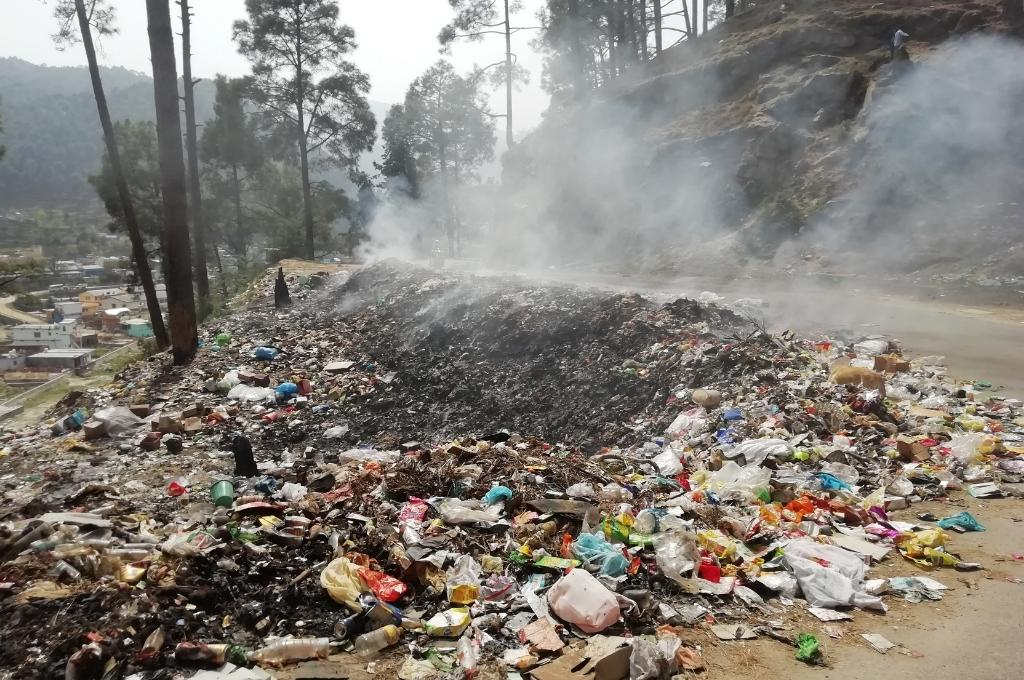
Having said this, it is not citizens versus the municipality. It is both. There are examples in Dehradun that show this can change.
The work being done by waste management NGOs is important precisely because it treats waste as a multi-layered social, political and cultural problem.
Waste Warriors Society works on behaviour change and community participation, alongside waste management infrastructure such as its Material Recovery Facility in Harrawala. It also connects waste management with the dignity and livelihoods of waste and green workers.
That approach matters because behaviour seldom changes because we were told once that something is good for us. It changes when the behaviour becomes convenient, visible and socially expected. It changes when there are consequences for repeated violations. And it changes when we understand that the person collecting our waste is not there to make our responsibility disappear.
Dehradun therefore has a choice. We can continue treating littering as an irritation to be cleaned up, segregation as a favour citizens do for the municipality, and waste collection as the point at which our responsibility ends. Or we can start treating waste for what it really is our responsibility even after we stop seeing it.
The question I am left with is a fairly simple one. Yes, Dehradun has a serious waste problem. Yes, the systems responsible for managing it need to work better. But while we ask the municipality what it is doing, perhaps we should also ask ourselves. What am I doing with my waste?
Keshav Nautiyal is a climate practitioner exploring the intersections of communities, public systems and sustainability. He is always open to conversations on conserving Himalayan cultures, literature and biodiversity
Liked this blog? We urge you to support our ongoing advocacy and research efforts by donating us online here: