From Nainital and Mussoorie to Shimla and Manali, summer has long been synonymous with tourism in the Himalayan hill stations. Every year, visitors escaping the heat of the North Indian plains arrive in large numbers, filling hotels, crowding markets, and boosting local economies. Yet something has changed in recent years.
The crowds that once arrived only during the traditional tourist season no longer disperse with the onset of the monsoon. Instead, they return almost every weekend.
Roads remain choked with vehicles, parking spaces fill within hours, and the tranquil character of these towns is increasingly overwhelmed by visitor numbers they were never designed to accommodate. On busy days, the mall road of many hill stations resembles Delhi's Palika Bazaar more than the peaceful mountain retreats they once were.
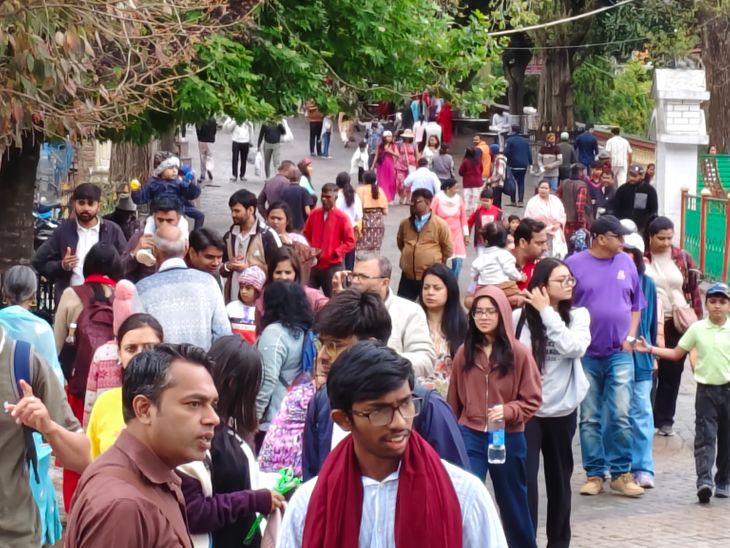
In hill stations in close proximity to the National Capital Region, this surge has been especially pronounced, driven by improved road connectivity, rising disposable incomes, social media-driven travel trends, and the growing popularity of weekend getaways.
At first glance, this appears to be a success story for states such as Uttarakhand and Himachal Pradesh. The scale of tourism growth is significant. According to the Uttarakhand Tourism Development Board, the state recorded nearly 5.96 crore tourist visits in 2024, while Nainital alone received over 10.24 lakh visitors during the year.
Tourism remains one of the most important economic lifelines for these mountain regions, where employment opportunities in many other sectors remain limited. Hotels, restaurants, transport operators, shopkeepers, guides, photographers, and countless others depend on tourism for their livelihoods.
Yet beneath these economic gains lies a growing concern: for how long can the hills bear?
The question is no longer whether tourism benefits mountain economies. Rather, it is whether these fragile mountain towns are being asked to accommodate more people, vehicles, and infrastructure than they can sustainably support.
Having spent most of my life in Nainital, I have witnessed a transformation that is impossible to ignore. There was a time when tourism was largely concentrated in the summer and autumn months. Visitors arrived in manageable numbers, many travelling by bus or shared transport.
Special arrangements, including the pedestrianisation of the Mall Road during the evenings, performances at the bandstand, theatre competitions, and the Autumn Festival, were organised. The town remained lively without becoming overwhelmed. Tourism generated livelihoods while allowing residents and visitors alike to enjoy the serenity and culture that made Nainital special.
Today, that balance appears increasingly strained.
The traditional tourist season has given way to weekend tourism. On many weekends, roads leading into Nainital resemble urban traffic corridors rather than mountain routes. Vehicles queue for kilometres outside the town, while congestion within the town often brings movement to a standstill. Residents planning routine errands must factor in long delays, and emergency services often struggle to move through the town.
The consequences can be severe. In 2025, a Nainital resident died after an ambulance remained stuck in traffic for several hours, underscoring how chronic congestion can become a public safety issue rather than merely an inconvenience.
Even tourists seeking relaxation often spend a significant part of their holiday stuck in traffic. The special arrangements that once defined Nainital's tourist culture have largely faded into memory.
The pressure extends far beyond the roads. Rising tourist numbers have increased demand for accommodation, commercial establishments, and supporting infrastructure, encouraging rapid construction that is not always compatible with the ecological sensitivity of the region.
Water demand rises sharply during peak periods, while waste management systems face mounting pressure. The strain is no longer anecdotal. A recent carrying-capacity assessment at Kainchi Dham found that 74% of visitors were dissatisfied with parking facilities, while 58% expressed dissatisfaction with sanitation, underscoring the widening gap between growing tourist inflows and the capacity of public infrastructure to support them. Noise levels increase, and public spaces become overcrowded.
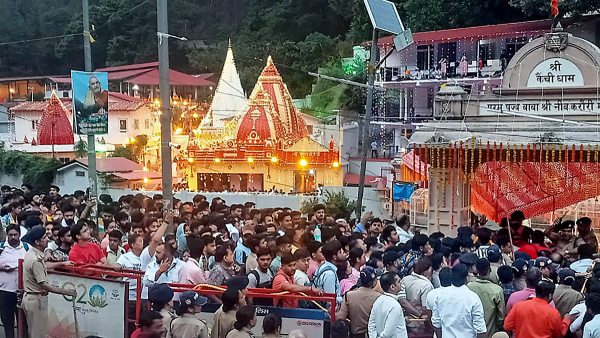
Equally significant are the social consequences of this transformation. Mountain towns such as Nainital have traditionally been valued not only for their scenic beauty but also for their slower pace of life, family-run establishments, close-knit communities, and welcoming atmosphere.
Growing tourism demand, however, has accelerated commercialisation. Large investments from outside the region are reshaping local economies and urban landscapes. While such investments create opportunities, they also contribute to rising costs, place additional pressure on public infrastructure, and gradually erode the social character that has long distinguished these towns.
Ironically, the very success of tourism risks undermining the qualities that make these destinations attractive in the first place.
This is not an argument against tourism. Mountain communities depend on tourism, and tourism, in turn, depends on thriving mountain communities. The challenge lies in managing tourist flows and infrastructure development in ways that reduce pressure on ecosystems and public services, which in many hill stations, including Nainital, are already operating at or beyond their sustainable limits.
The conversation must therefore shift from maximising tourist numbers to managing tourism sustainably. Better public transport, park-and-ride facilities outside town centres, stricter enforcement of construction regulations, improved waste management systems, and carrying-capacity-based planning are no longer optional. They are essential.
Most importantly, policymakers must recognise that more tourists do not automatically translate into better outcomes. A destination overwhelmed by traffic, pollution, overcrowding, and a declining quality of life ultimately serves neither its residents nor its visitors.
The Himalayas have always welcomed travellers. Their lakes, forests, mountains, and culture continue to inspire millions. But these landscapes are not limitless. Roads can accommodate only so many vehicles. Infrastructure can support only so many people. Ecosystems can absorb only so much pressure.
As another weekend sees traffic stretching towards the hill stations of the Western Himalayas, one cannot help but wonder: if current trends continue unchecked, for how long can the hills bear?
Aayush Shah is a Senior Research Fellow in Economics at IIT Madras. His interests span climate risk, vulnerability, adaptation and migration in the Indian Himalayas.
Liked this blog? We urge you to support our ongoing advocacy and research efforts by donating us online here: