I hail from Varanasi, in the plains, and like many people from the plains, I have always dreamed of visiting the beautiful mountains. For many of us, Uttarakhand represents that dream. But whenever I see endless lines of cars crawling through the hills and long traffic jams, one question inevitably comes to mind: why is there no law to regulate the influx of vehicles into the state?
In school, we were taught that the Himalayas are young, growing mountains—fragile and geologically unstable. The movement of such a large number of vehicles through these hills increases pressure on this delicate ecosystem, making it more vulnerable to landslides while also diminishing the natural beauty that draws people here in the first place.

Tourism is the lifeline of Uttarakhand, and thousands of people depend on it for their livelihoods. However, the movement of such a large number of vehicles also needs to be managed through effective regulation.
Government records show that Uttarakhand received 5.96 crore tourists in 2025, which increased to 6.03 crore visitors the following year. In 2024, nearly 12 lakh vehicles entered the state, of which more than 8 lakh were private vehicles. Despite these rising numbers, there is still no comprehensive mechanism to regulate the influx of vehicles into the state.
To better understand how such challenges can be addressed, it is useful to examine other mountainous regions that face similar pressures from tourism, fragile ecosystems, and limited road capacity. Countries such as Switzerland and Austria offer valuable examples of mobility management in environmentally sensitive alpine regions.
Private petrol and diesel vehicles are prohibited in Swiss mountain towns, particularly Zermatt in the Alps. Visitors must park their vehicles at designated gateway points and continue their journey by train or electric shuttle services. This approach ensures smooth connectivity for both tourists and residents while reducing traffic in environmentally sensitive mountain regions. At the same time, it supports a thriving tourism economy without compromising environmental protection.
Similarly, Austria has adopted mobility management measures in several mountain tourist destinations to balance tourism with environmental conservation.
Austria has also adopted mobility management measures in high-traffic mountain regions and alpine tourist destinations such as Hallstatt. These include measures to reduce congestion in environmentally sensitive areas, shuttle-based access during peak tourist seasons, and regulated parking outside town centres. Rather than completely restricting entry, the focus is on managing the concentration of vehicles in small and ecologically fragile settlements.
The underlying principle is the same in both Switzerland and Austria: instead of banning cars altogether, mountain regions regulate how and where they operate. Visitors are still allowed to enter, but gateway parking systems, integrated public transport, and seasonal or area-specific restrictions help manage congestion within these destinations.
These international examples highlight a challenge that Uttarakhand increasingly faces: limited road capacity in mountainous regions combined with a sharp rise in seasonal and tourism-driven vehicle traffic. They also demonstrate that the solution lies not in restricting mobility altogether, but in promoting regulated access, better demand management, and smarter transport planning.
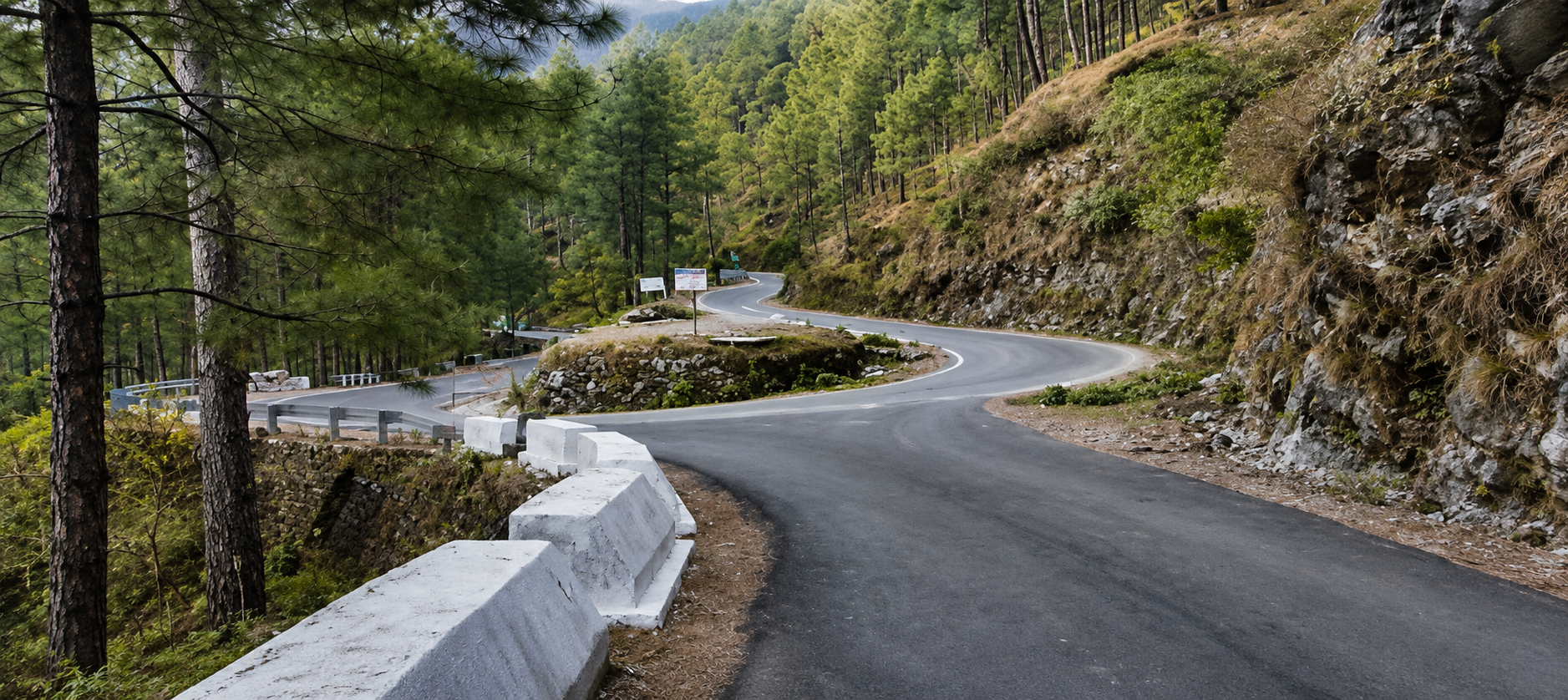
Sustainable tourism in Uttarakhand depends on an efficient public transport system supported by effective visitor management. A well-connected transport network allows visitors to travel safely, comfortably, and affordably while reducing traffic congestion and pollution. It also improves access to remote tourist destinations, benefiting local communities and supporting the regional economy. At the same time, effective visitor management helps prevent overcrowding, protects the state's natural and cultural heritage, and enhances the overall visitor experience. Achieving this will require better planning, transparent information systems, trained personnel, and modern transport infrastructure.
As fewer private vehicles climb the winding mountain roads, the Himalayas can breathe a little easier, preserving their timeless beauty for generations to come.
Shivangi Pandey is pursuing an LLM at the National Law University, Jodhpur (NLUJ), and holds an LLB from the University of Delhi.
Liked this blog? We urge you to support our ongoing advocacy and research efforts by donating us online here: