Across the Western Himalayas, both people and landscapes are adapting under mounting pressure, often not by choice, but out of necessity.
Forests are shifting, flowers are blooming earlier, rhododendrons are moving upslope and farmers are learning and relearning how to respond. This adaptive churn is often celebrated as a sign of resilience. But adaptation alone is not mitigation. And adaptation under pressure is not fair and just.
When Rhododendron arboreum, locally known as Buransh, began blooming earlier and moving upslope in the mid-2010s, the mountains were sending a warning. By 2017, evidence had already shown that flowering seasons were advancing, winter temperatures were rising, and winter chilling was declining across Himalayan ecosystems.
That moment should have been treated as an ecological warning, not merely a botanical curiosity.
In a developing country like ours, where crises often receive attention only after visible losses occur, such changes deserve the same urgency we reserve for floods and droughts. Yet these early warnings went largely unheeded. As a result, today, adaptation is racing ahead of governance.
Rhododendrons are not keystone species in the strict ecological sense. Nor are they classic indicator species whose survival depends on highly specific environmental conditions. Instead, they occupy a more subtle but equally important role. They respond early to environmental change, though not in ways that immediately appear catastrophic.
Their phenology, particularly the timing of flowering, responds rapidly to warmer winters, changing rainfall patterns, declining soil moisture, and reduced snow cover. As a result, changes in flowering behaviour have become one of the earliest and most visible biological signals of climate change.
Comparative analyses drawing on herbarium records from the late 19th-century, extensive 20th-century collections, and recent field observations show that R. arboreum now flowers three to eight weeks earlier at comparable elevations in the Northwest Himalaya. At mid-elevations, around 1,600 metres, it now flowers nearly a month earlier, shifting from mid-February to late January.
By 2014–2017, multiple studies had already documented a clear shift in rhododendron flowering, from spring to late winter, closely linked to rising temperatures. The signal was strong enough to warrant greater research attention, systematic monitoring across elevations, and proactive land-use planning.
This is climate change acting on plant physiology, reflected in the changing timing of spring blooms. Similar shifts from spring to late-winter flowering have also been documented through long-term field studies at the GB Pant Institute of Himalayan Environment and reported by Mongabay India and The Hindu since 2014.
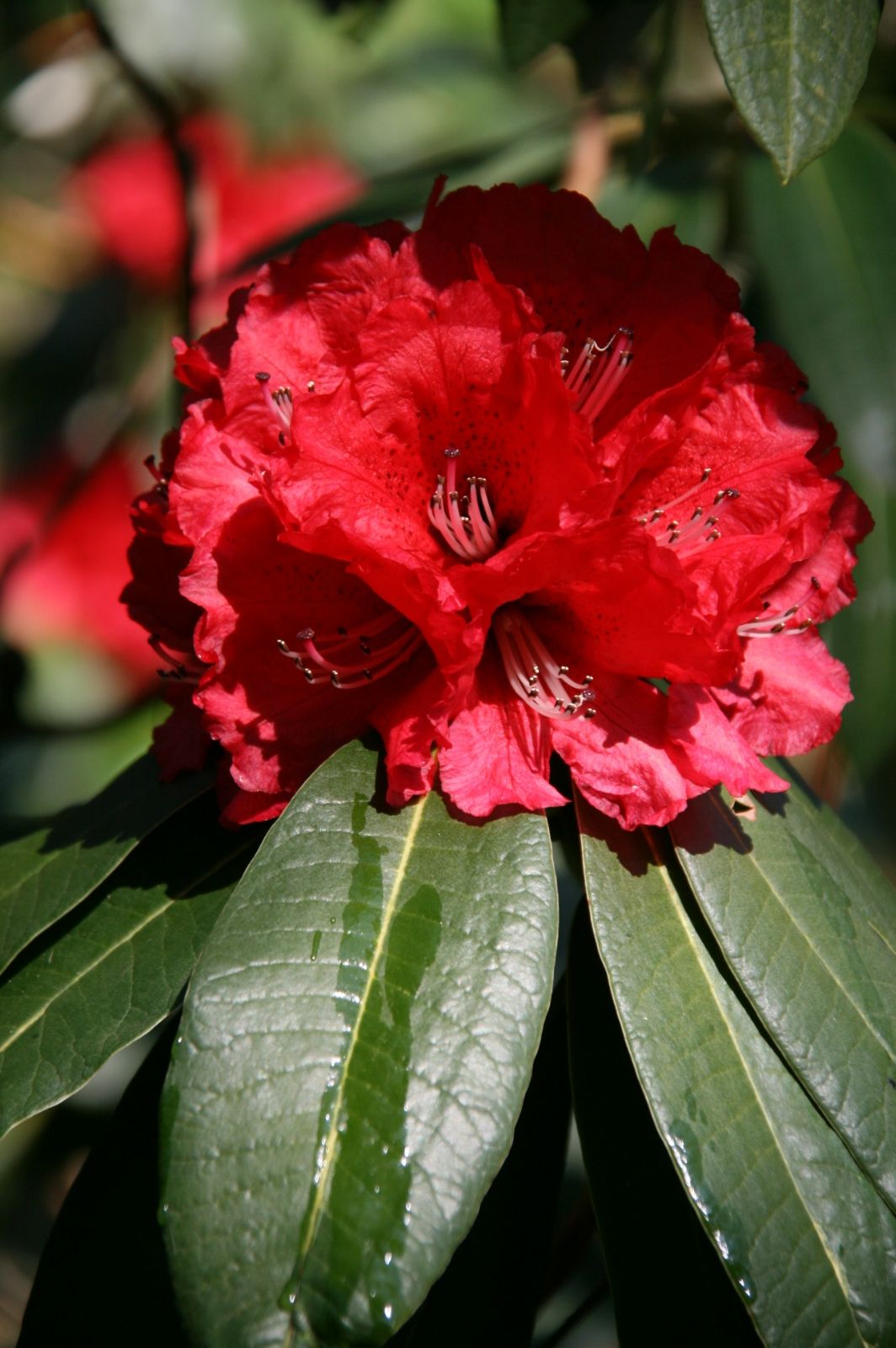
Phenological shifts, such as earlier flowering, matter not because they are unusual, but because of what they reveal. In complex climate systems, early biological changes often signal the beginning of ecological destabilisation, where gradual warming pushes ecosystems towards critical thresholds, triggering abrupt change rather than gradual adjustment.
Early rhododendron flowering should therefore be understood not simply as a trend, but as an early warning that the conditions supporting Himalayan ecological stability are beginning to change.
Because the Himalayas feed river systems that sustain nearly two billion people across South and East Asia, ecological disruption in these mountains carries risks that extend far beyond the region itself.
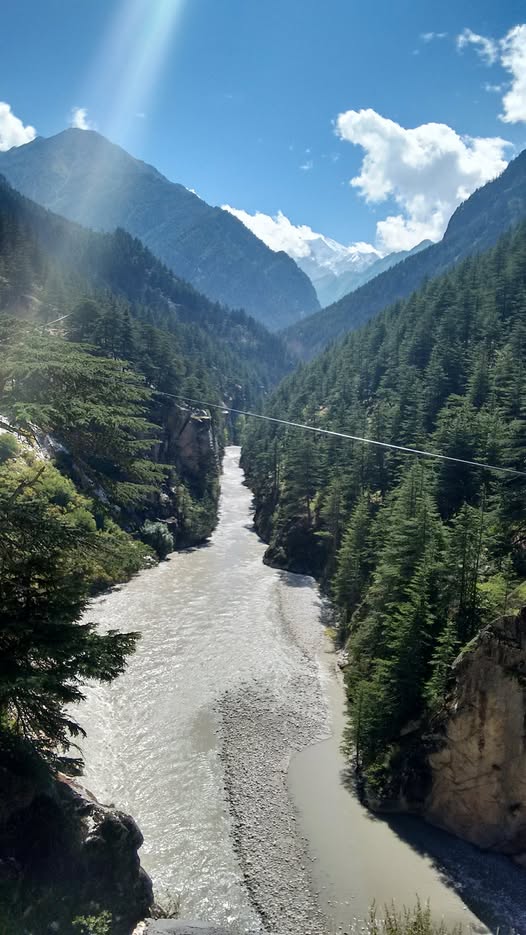
A question quietly shapes the Himalayan climate debate: Is climate change reshaping the landscape, or is landscape transformation amplifying climate change? The answer is both. The two processes reinforce one another.
Road construction, slope cutting, hydropower projects, tourism infrastructure, and forest fragmentation have altered surface reflectivity, wind exposure, drainage patterns, and snow retention across mountain landscapes. Fragmented slopes warm more quickly. Disturbed forests lose moisture sooner.
Together, these landscape changes amplify the effects of climate change, creating localised warming that plants experience long before it becomes apparent in broader climate trends.
Rhododendron flowering sits at the intersection of these changes.
Earlier blooming reflects not only rising temperatures but also landscape transformations in places such as the cold desert of Lahaul–Spiti, where snow cover is declining, runoff is increasing, and ecological stability is eroding.
Recent analyses published in Frontiers in Climate (2024) and reports by ICIMOD point to a shift from snow-dominated winters to rain-heavy precipitation, increasing the risks of runoff, slope instability, and erosion across the region.
Mountain ecosystems have always adapted through natural feedback mechanisms. The real question now is whether human interventions are pushing those adaptive processes beyond safe ecological limits.
From Forest Signals to Farming Decisions
The bloom of Buransh does not end in the forest; it foreshadows change downstream.
As winter chilling declines, apple orchards, once emblematic of prosperity in the mid-altitude Himalayas, are increasingly struggling at lower elevations. When winter chilling requirements are no longer met, apple cultivation can decline rapidly, often before the effects of drought or extreme heat become fully apparent.
Recent peer-reviewed studies and regional assessments have also indicated a 50–65 per cent decline in cereal cultivation below about 1,000 metres in the Central and Garhwal Himalayas, alongside the expansion of temperate fruit cultivation to elevations above 2,000 metres.
Farmers are not waiting for policy clarity. They are already adapting.
In Himachal Pradesh, apples are increasingly being replaced by persimmons, pomegranates, kiwis, and vegetables that are better suited to rising temperatures and lower water availability. Persimmon cultivation has more than doubled over the past decade, driven by its greater heat tolerance and shorter harvest cycle.
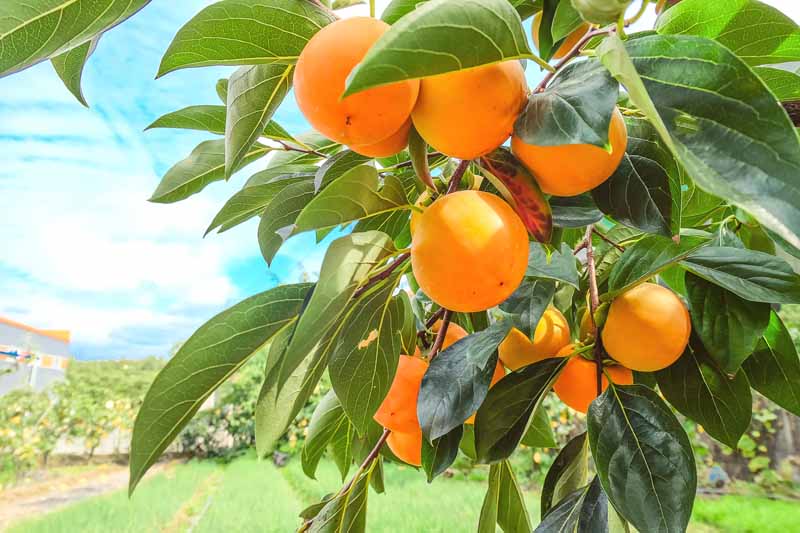
In villages such as Churla, diversification was driven by drought, drying springs, and declining livelihoods rather than climate-smart planning. Surveys in Himalayan farming communities show that more than 90 per cent of agricultural households now recognise climate change as a key driver of shifting seasons, declining snowfall, and changing crop calendars.
This is adaptation. But it is also a loss: quiet, cumulative, and unevenly distributed.
This is a troubling paradox unfolding in the Himalayas. Because ecosystems and communities are adapting, the crisis appears manageable. Early flowering is normalised. Crop diversification is celebrated as innovation. Migration is reframed as aspiration.
But adaptation without mitigation accelerates the movement towards ecological tipping points. Earlier flowering, for instance, increases the risk of mismatches, a pattern documented in the IPBES Global Assessment on Pollinators (2016). As flowering times shift, pollinators may not emerge or become active at the same pace, reducing successful pollination even when vegetation appears healthy.
Rain replacing snow also undermines long-term water storage. Meanwhile, crops moving to higher elevations are compressing agriculture into increasingly narrow climatic zones.
Under such conditions, treating adaptation as success risks turning a slow-moving crisis into a permanent one.
This is where institutions such as WRI become important, not merely as custodians of data, but as organisations that can help translate ecological warnings into action.
Working alongside state initiatives such as the Indian Himalayas Climate Adaptation Programme (IHCAP), they can play a critical role in ensuring that early environmental signals inform policy and planning. Since 2018, WRI India has partnered with the Government of Uttarakhand to integrate climate-risk data into planning decisions related to water resources, infrastructure, and development.
Yet preparedness datasets that track water risk, climate vulnerability, and exposure are still too often used retrospectively to explain why water systems fail or agricultural systems decline.
In Uttarakhand, tools such as WRI's PREPdata dashboard help visualise basin-level stress, seasonal variability, and climate exposure. However, their full potential as early-warning tools remains largely underutilised.
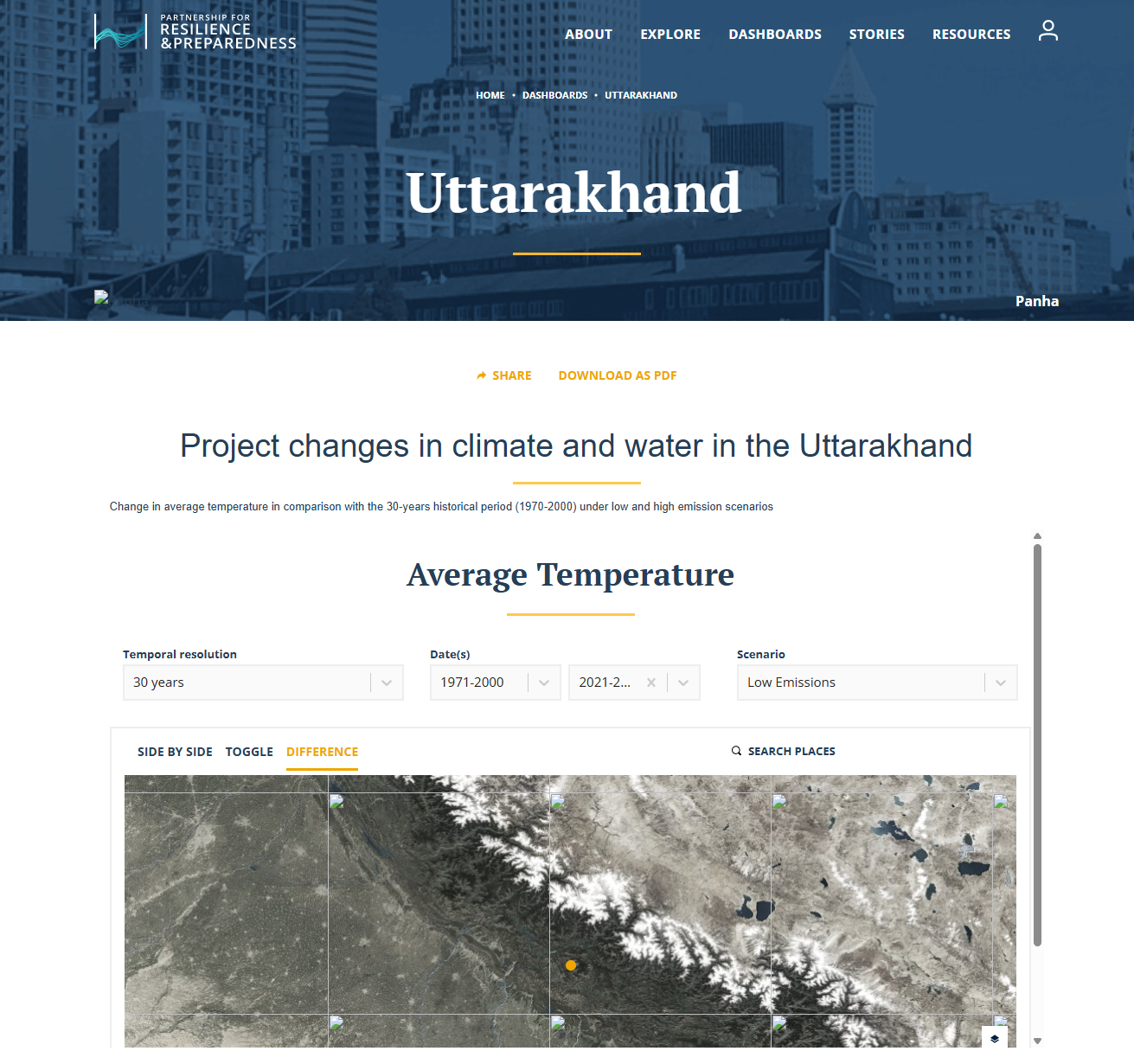
Integrating biological indicators such as rhododendron flowering patterns, upslope species movement, and changes in bloom intensity could transform preparedness tools from instruments of retrospective analysis into genuine early-warning systems. Combined with basin-level hydrology, winter precipitation trends, and crop suitability models, these indicators could help identify vulnerable watersheds years before a crisis emerges rather than after it has occurred.
Bridging biological signals with climate data is not primarily a technical challenge. It is an institutional choice.
The Himalayas are not fragile because they are weak. They are fragile because they are finely balanced. Rhododendrons adjusted their clocks first. Farmers followed. Landscapes responded where they could.
But adaptation is not consent to unchecked warming, delayed mitigation, or chronically underfunded research. When Buransh bloomed too early, the mountains were sending a clear warning. The signals are no longer subtle or speculative. They are visible, recurring, and already reshaping water flows, cropping patterns, and everyday decisions.
So why do we wait? Why does action arrive only after thresholds are crossed, springs run dry, or farming systems collapse?
If early warnings are already written into forests, slopes, and seasons, mitigation and proactive adaptation cannot be deferred to future generations. Policies designed for a relatively stable climate, covering climate adaptation, infrastructure, water management, and ecosystem conservation, must now be urgently revised because they were not built for rapid, non-linear ecological change.
The remaining question is not whether the Himalayas can continue to adapt. They already are. The real question is whether policy and planning can evolve quickly enough before adaptation gives way to irreversible loss.
Gojesh Konsam is a graduate of the Indian Institute of Forest Management, Bhopal. His core interests lie at the intersection of mountain ecology, environmental conservation, and community-led sustainability.
Liked this blog? We urge you to support our ongoing advocacy and research efforts by donating us online here: